Tuesday, September 4, 2012

Don't Spend All Your Tea in One Place

I bought a tea brick to use as a prop, and I was surprised at how beautiful it is.  But tea bricks also have a rich history.

Tea was used in China as money since ancient times (early on, they were used to pay taxes to the Emperor).  It also became an important element for trade with Tibet and other surrounding nations -- and eventually, with the English.  Tea bricks were an important commodity on the Silk Road.

The brick form made it easy to transport, and the bricks could be broken as needed to make change (often determined by weight).  However, it was harder to set a standard value on the bricks, as they varied in quality (though some of the resources I have been looking at have listed standard exchange rates, such as one tea brick being worth eight Tibetan Tangka coins, or one horse being worth twenty tea bricks in Russia. 

The quality of the tea tended to improve the farther from China the tea was going to be used.  Some of the finest bricks were intended for use in Russia, and they weren't often preserved in bick form, so bricks with Russian writing are considered the most rare.  Some of the lowest quality bricks included impurities ranging from wood to dung.  The recipient of a tea brick also had to be careful, as soot was sometimes added to make inferior tea bricks look richer.

In some areas where vegetation was hard to come by, tea bricks could fill a nutritional need.  Pieces of the brick would be roasted, then consumed in a soup-like form, with added savory ingredients.
While tea bricks were prefered by some cultures (such as the Cantonese), they were eschewed by the American colonists (so no tea bricks were thrown overboard during the Boston Tea Party).

Tea bricks are considered collector's items today, and some of them can be worth thousands of dollars.  Fermented teas (such as pu-erh) are still usually sold in brick -- or some other compressed shape -- form.

 According to this resource:  Tea Money of China: http://www.charm.ru/coins/misc/teamoney.shtml
the design with a Chinese image and chinese characters on one side and the distinctive break marks with swirls could be pre-WWII (and considered "original") or it could be from the mid 70s to mid 80s, when they were sold as novelty pieces in grocery stores.  Or, it could be used for a current brick, as you can buy similar designs new from any number of on-line resources. While I bought mine on Etsy, I'm pretty sure it is a current design.

Friday, August 31, 2012

Tea of the Week: Harney and Sons Paris

I think the most comprehensive book on tea flavors I've ever read is The Harney and Sons Guide To Tea.  I've been wanting to try thier Paris blend for a while.  I found it while window shopping at William Sonoma.  I must say it didn't disappoint.

Liquor -- deep mahogany
Aroma -- complex, but with a main note of caramely bergamot.

Body -- medium

Flavors -- This tea reminds me of an Earl Gray, only sweeter and fruitier, with a slight nod to vanilla.  The flavors blend together well, though there is more emphasis on the slightly astringint black tea than the aroma suggests. 

Wednesday, August 29, 2012

People in Tea: Jessica Evans


While we were in Austin over the weekend, I was able to sit down with Jessica Evans of Zhi Tea.  Zhi, owned by Jeffrey Lorien,  specializes in organic whole-leaf artisinal teas that they blend themselves.  They are fair trade certified.  They also specialize in educating their customers about the entire tea experience.  Jessaca brewed samples of several teas for us to try, including a rooibos-based blend called Sweet Desert Delight, which was the first Zhi custom blend.  The shop had a relaxing scent in the air, and the whole place was very serene. 

Q. What got you into the tea industry?

A.  I worked in the natural foods industry and I got to know the best local resources for everything from local beef to local tea.  I was impressed by Zhi Tea's reputation.  I liked the way they focused on community relations and were always ready to donate to non-profits.  When I was looking for a job, I decided I wanted to work for them.

(They also offer discounts on re-fills for their tins, to save on the carbon footprint impact of their packaging.)

Q.  What is your favorite tea?

A.  Actually, it is difficult to choose just one favorite.  There are so many great teas that there is one for every mood and one for every part of the day.  Today, I'm in the mood for tropical green.  It just matches a sunny day and helps me keep up my energy.

(The shop was offering all customers samples of iced Kenya Chai, again a rooibos-based blend.  They do have a full selection of black and green teas as well, including the cleverly named Austin Breakfast.)

Q. Do you have a favorite teapot or teacup?

A. I really like this one.

Q.  What do you want people to know about Zhi Tea?

A.  Zhi's Jeffery Lorien has made tea his passion.  He samples thousands of teas, and only picks the best.  He is like a curator of tea, and he has put together an exquisite collection. 

Also, we are featuring a new way to make tea that allows you to steep iced tea without heat and without it becoming overly astringent.

Q.  What do you want people to know about tea in general?

There are some things you can do to make tea, which is already super healthy, even healthier.  If you want to avoid adding sugar to tea, you can steep some stevia leaves right along with the tea.  You can also make caffieinated tea into decaf by steeping once, discarding the tea and steeping it again.  Using tea concentrate instead of water is also a great way to add extra flavor to recipes. 

Sometimes people say that the don't like tea, or that they only like coffee.  This is often because they have only sampled one or two varieties of tea.  There are blends for every taste, which is why we display our teas in containers people can open and experience.  I would encourage people to continue exploring tea and trying new teas.  Remember to stay curious and always have a sense of wonder.

Thanks Jessica!  Want to try out Zhi Tea for yourself?  Next weekend is their fifth anniversary, and they're having a ton of special events.  If you want to go to the cocktail party (Friday 9/7), you will need to RSVP on facebook:


They are also having a picnic on Sunday (9/9), where everyone is invited to bring their best tea-inspired potluck item for a chance to win a $100 gift certificate.  Check their web site for other related events, though for some of them, seating is limited. 

Tuesday, March 13, 2012

Where Did Tea Bags Come From?

Over the course of history, tea has been processed in different ways in the name of convenience for transport and consumption.  Individual leaves have been rolled into pellets,  and larger amounts of leaves have been molded into bird's nests.  But perhaps no packaging method has impacted the way people consume tea as the tea bag.

Legend has it that in 1908, tea importer Thomas Sullivan decided to send samples of his tea to his customers.  He packaged them attractively in small silk bags.  Said customers were delighted when they found they could steep the entire sachet in their teapot.  They started clambering for more (and complaining when their orders did not show up in sachets), and voila, the tea bag was born.  Cost constraints caused Sullivan to switch from silk to gauze, and later producers moved to the paper fiber bags you often see today. 

But, romantic as this story is, was the tea bag really invented by accident?  There is some question, as there were patents for tea bags on file as early as 1903. 

For the manufacturer, the tea bag was an obvious benefit.  It allows small bits of dust (fannings) to become a useful grade of tea.  Tea could be marketed as a portable, mess free affair.

It is also useful for the tea drinker, if you want to take your tea on the go (making it easy to order a cup of hot water at a restaurant and still enjoy your favorites), if you don't have time to wash a tea infuser, or if you have a lot of people over, and you want an easy clean-up.

However, higher grades of tea are reserved for loose teas, and tea-bag only consumers were never motivated to taste truly special infusions.  And some people claim they can taste the paper.  Today, some tea makers are trying to offer the best of both worlds by packaging broken leaf, or even whole leaf teas in large nylon sachets (which allow room for the tea leaves to unfurl properly).

Friday, March 2, 2012

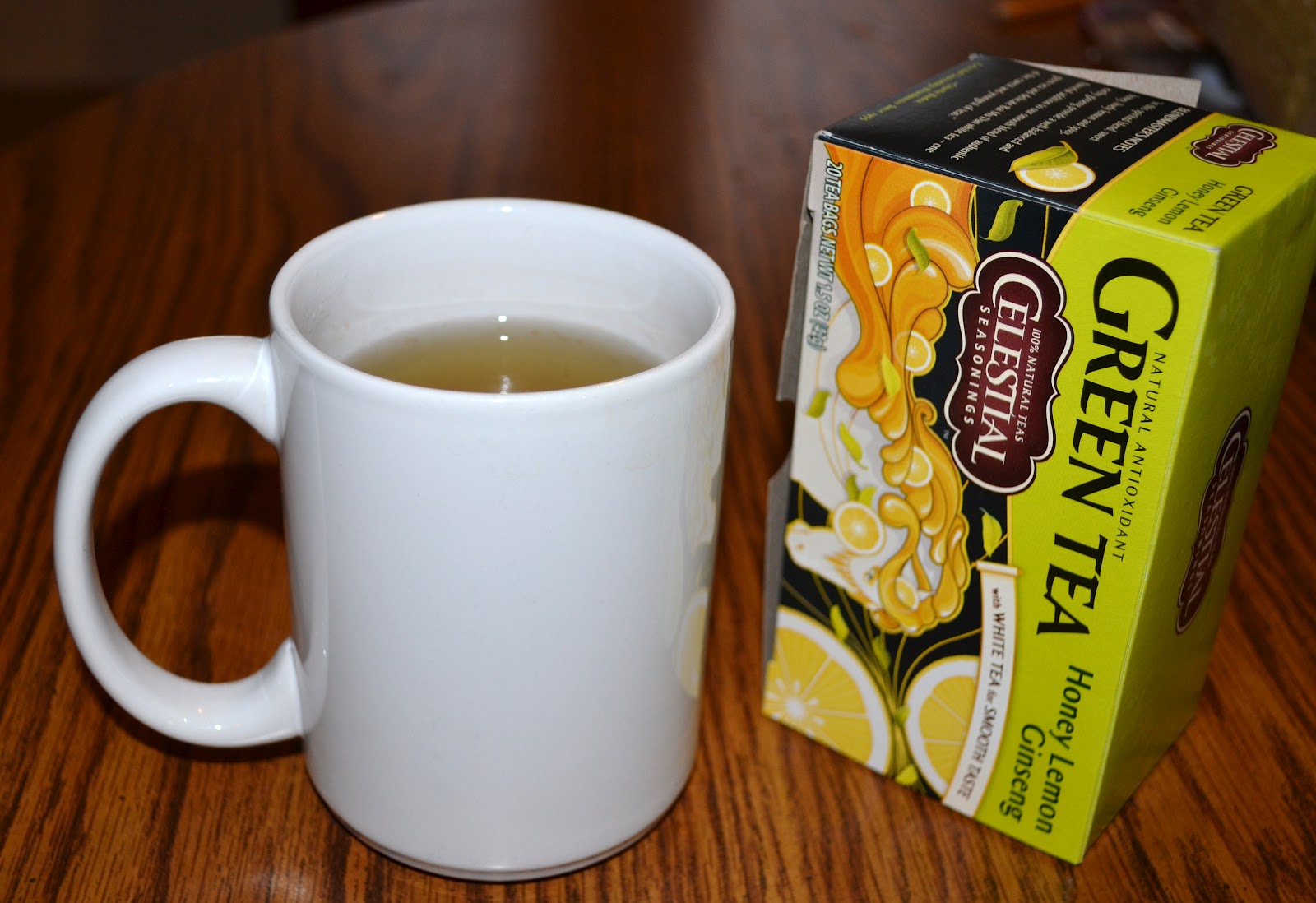
Tea of The Week: Celestial Seasonings Honey Lemon Ginsing Green

When I visited my mom, I told her that we don't do sodas anymore, and asked her to get us some ginseng greeen tea.  This is the one she came up with.  It wasn't what I was expecting, but I liked it a lot.  Celestial Seasonings has a long history of adding herbs to tea, which started back in 1969, when the owners harvested and dried their own herbs in the Rocky Mountains. 

Liquor -- Pale gold

Aroma -- The lemon scent is very pronounced.

Body -- Light

Flavors -- The lemon flavor is the first thing that hits the tongue.  It has a hint of natural sweetness, which makes the ginsing flavor almost disappear.  The taste of the green tea is there, underneath everything else.  It is a very light tea with only a touch of astringancy. 

Other -- This tea is a flavored blend.

NOTE: I evaluate tea blends on this blog based on what came in the canister, so these tasting notes do not reflect any addition of dairy or sweeteners.